
 Original images held by the Harvard-Yenching Library of the Harvard College Library, Harvard University
Written by Eiko Kawamura 河村瑛子 (Kyoto University)
This book is a handwritten draft manuscript of Santō Kyōden’s 山東京伝 (1761–1816) work Baisa-ō Gion no Kaji katakiuchi sencha no hajimari 賣茶翁祇園梶復讐煎茶之濫觴, published in 1805. It belongs to the genre known as kibyōshi 黄表紙 (literally, “yellow covers”), illustrated novels featuring intellectual humor and satire that flourished from around 1775 to 1806. Kyōden is one of the most famous writers among them. This work is a tale of vengeance, a popular subject in late kibyōshi works following the implementation of publishing controls under the Kansei Reforms (1787–1793), which were rooted in Confucian thought.
The manuscript’s text is written in black ink, with numerous corrections made using pasted paper and red ink by the author himself, which delivered his instructions to the copyist and artist who made the clean copy for its publication. The Harvard-Yenching Library also holds a printed edition of the book. By comparing the author’s manuscript and the printed book, we can grasp how this work was created.
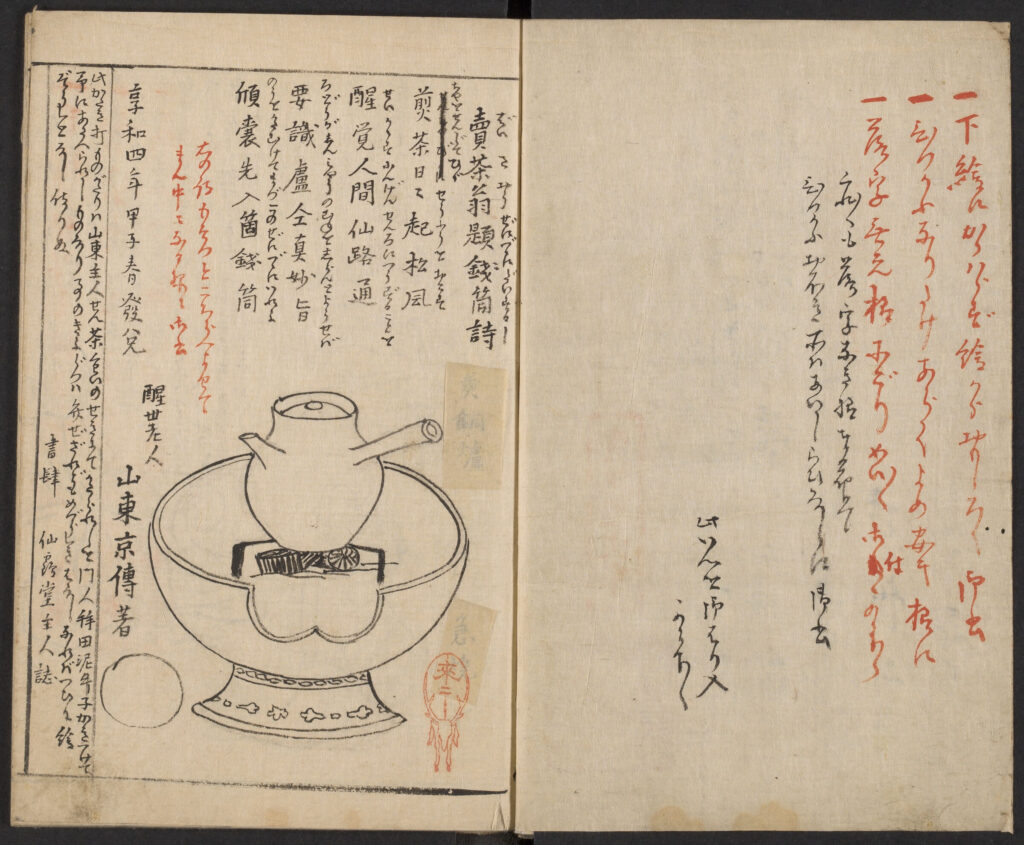
The original first page of Katakiuchi sencha no hajimari.
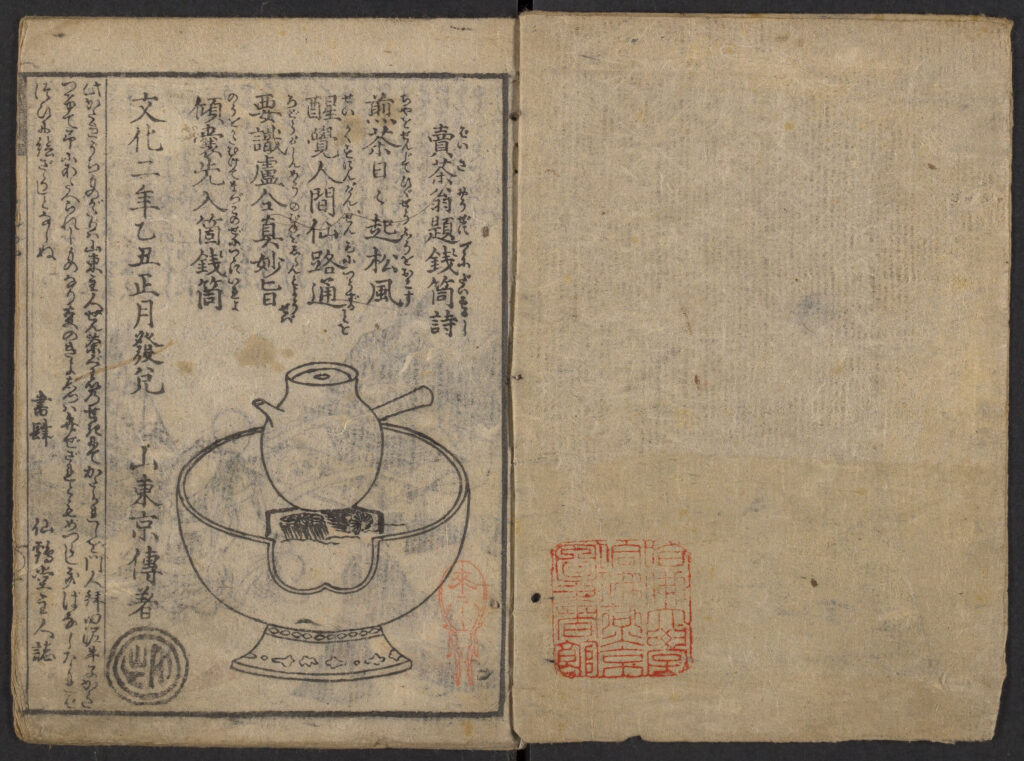
The first page of the printed version (also held by the Harvard-Yenching Library) for comparison.
Both copies were formerly owned by Meiji-period drama critic and novelist Kōdō Tokuchi 幸堂得知 (1843–1913) and later became part of the Yasuda-bunko 安田文庫 collection, which belonged to Yasuda Zennosuke 安田善之助 (1879–1936), the second head of the Yasuda family’s financial dynasty. They were exhibited at an antique book show held at Asakusa Sensōji Temple in Tokyo, on November 13 and 14, 1936, but were reportedly destroyed during World War II. However, in reality, they survived the war, crossed the ocean, and ultimately found a permanent home at the Harvard-Yenching Library.
Reference: Kimura Senshū 木村仙秀. “Matsunoya-bunko no zōsho” 松廼舎文庫の蔵書. In vol. 3 of Kimura Senshū shū 木村仙秀集. Musashimurayama, Jpn.: Seishōdō shoten, 1984.