
Wang Lixin 王立新
China Social Sciences Press, Beijing, 2024
Reviewed by: Mao Keji (PhD Candidate, Tsinghua University, HYI Visiting Fellow)
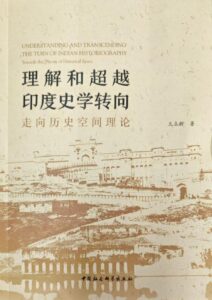
Professor Wang Lixin from the School of History and Culture at Central China Normal University published his book, Understanding and Transcending the Turn of Indian Historiography:Towards the Theory of Historical Space, in April 2024. Taking the transition from “Orthodox Indian Historiography” to “New Indian Historiography” as its contextual backdrop, the book creatively explores and interprets issues related to traditional agricultural society and the role of state in early modern India (1500-1800).
Lixin’s interest in Indian historiography emerged from a fascinating scholarly puzzle. While translating The New Cambridge History of India, he noted that this multi-volume general history, published by Cambridge University Press in 1993, surprisingly commenced its narrative from the Mughal Empire rather than from earlier historical periods, marking a distinct departure from the established historiographical traditions. This pivotal “paradigm shift” in the trajectory of Indian historiography ignited his scholarly passion and finally gave rise to this publication.
Lixin observes that since the emergence of modern Indian historiography in the early 19th century, scholarship on Indian civilization and history has primarily revolved around analyses of Indian society and state structures. Such research generally depicted Indian rural society as a conglomerate of numerous autonomous “village communities,” likened to small republics practicing communal property ownership. Concurrently, this tradition posited the existence of a centralized despotic state, external to these self-sufficient village communities, responsible for undertaking public works. This established academic tradition, which viewed “village society” and the “despotic state” as foundational elements of Indian civilization, significantly shaped the perceptions of Indian nationalists. Both Gandhi’s traditionalist Indian nationalism and Nehru’s modernist branch traced their ideals back to Panchayat governance and self-sufficient village economies symbolized by the spinning wheel, reflecting a romanticized collective imagination that became key to Indian nationalism.
However, The New Cambridge History of India introduced a distinctly different “New Indian Historiography”: it reinterpreted traditional rural society by rejecting the “despotic state” theory of Orthodox Indian Historiography and instead characterizing the traditional rural society of India as a stateless “agrarian space.” Additionally, it deconstructed the historical-geographical foundations of Indian civilization as previously conceived, portraying India not as a singular natural region but as a pluralistic, open, modern historical-geographical space.
This “paradigm shift” unquestionably represents a fundamental rupture in the development of Indian historiography, creating two clearly distinct academic approaches. Facing this, Lixin posed two questions warranting further exploration: first, can contemporary scholars make further contributions, if they neither align with Orthodox Indian Historiography nor with New Indian Historiography? Second, what precisely prompted this paradigm shift in Indian historiographical studies?
Addressing the first question, Lixin attempts to reinterpret early modern India’s traditional agricultural society through the lens of “tribal society theory,” diverging both from the “village community” perspective dominant in Orthodox historiography and from the “segmentary state-theatre state” theoretical model promoted by New Historiography. Lixin argues that numerous diverse communities, distinct in scale, livelihood, and social organization, existing outside the influence of states and civilizations, should be classified as tribes. Thus, pre-modern Indian society was not a uniformly generalized “traditional rural society,” but rather a complex spectrum comprising natural agriculture, horticultural societies, and various forms of peasant communities, fundamentally constituting a tribal system. Although Orthodox Indian Historiography typically characterized traditional Indian rural society as a “village community world” following the peasantology model, it implicitly acknowledged the existence of a separate tribal domain. Similarly, New Indian Historiography, employing the “segmentary state-theatre state” theory borrowed from some recent anthropological studies, effectively returned the study of Indian history to the analytical frame of tribalism.
Given that both Orthodox and New Indian Historiography have attached significant weights to the concept of tribes, Lixin advocates revisiting early modern Indian statehood and civilization through the perspective of tribal societies. Accordingly, the Mughal Empire should neither been seen as the Oriental despotic state proposed by Orthodox Indian historiography, nor as the early modern state suggested by the New Indian Historiography, but rather as a Muslim military empire capable of coordinating various diverse communities.
Addressing the second question, Lixin contends that this “paradigm shift” was driven less by new historical sources than by methodological shifts in historical scholarship, specifically changes in conceptual frameworks and theoretical models. These methodological transformations significantly altered both analytical historical interpretations and descriptive historical narratives. Linxi’s research demonstrates that the traditional image of India presented by Orthodox historiography is not the timeless, glorious tradition as popularly imagined; rather, it is largely a construct of the modern historical context of the post-1800s and British colonial rule in India. For example, both Gandhi and Nehru regarded the caste system as evidence of India’s enduring historical culture but overlooked the crucial role of British colonial administration, which transformed India’s previously fluid and decentralized local customs into unified, Brahmanized “Hindu law,” consequently defining clearly bounded caste communities. Thus, many seemingly ancient traditions are, in fact, modern inventions shaped by contemporary administrative needs and social trends. Meanwhile, New Indian Historiography also reflects postmodern globalist intellectual trends among scholars in the recent decades, notably their enthusiasm for deconstructing the concept of nation-state.
Frankly, the Chinese academic community remains insufficiently acquainted with New Indian Historiography as exemplified by The New Cambridge History of India. Many scholars have yet to fully grasp the distinctions between Orthodox and New Indian historiographical approaches. Against this backdrop, Lixin has made significant original scholarly contributions by closely examining the continuities and divergences between these two scholarly trajectories, thereby exploring new academic spaces beyond these. It is sufficient to say that this work represents an important initial step toward establishing a “Chinese school” in the field of Indian history studies.