
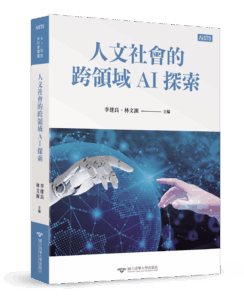
Chien‑Liang Lee & Wen‑yuan Lin
Hsinchu: National Tsing Hua University Press, 2022.
Reviewed by: Prabhat Katyayan Mishra (PhD Candidate, Centre for the Study of Law and Governance, Jawaharlal Nehru University
Taiwan’s AI governance journey began with the Ministry of Science and Technology’s five‑year, NT$16 billion AI Grand Strategy for a Small Country (「AI小國大戰略」, 2017–2021), which seeded dedicated research hubs and talent pipelines to jump‑start an indigenous AI ecosystem. Building on that foundation, the Executive Yuan rolled out the AI Taiwan Action Plan (2018–2021), budgeting NT$40 billion to train 33,000 specialists and promote real‑world deployment across industry and public services. After MOST was elevated to the National Science and Technology Council (NSTC) and the Ministry of Digital Affairs (MODA) was created in 2022, Taiwan launched AI Taiwan Action Plan 2.0 (2023–2026). The update added ethics, labor‑market impact studies, and a MODA‑run AI Evaluation Center to the original growth agenda.
To anchor these policies in law, the NSTC released a draft Artificial Intelligence Basic Act on July 15, 2024, proposing seven human‑centric principles (sustainable development, human autonomy, privacy and data governance, cybersecurity and safety, transparency and interpretability, fairness and non‑discrimination, and accountability) alongside risk‑based oversight and regulatory sandboxes. This signals Taiwan’s shift from strategic plans to binding legislation. In July 2025 , Taiwan launched the ambitious Ten Major AI Infrastructure Projects to position the island as a “smart‑tech” hub, with a focus on silicon photonics, quantum technology, and AI robotics and a long‑term economic target exceeding NT$15 trillion by 2040.
As the above discussion shows, Taiwan’s engagement with frontier technologies began early, in 2017, when few countries had a comprehensive AI strategy. Over nearly a decade, policy has moved from capability‑building to governance and evaluation. Yet Anglophone analyses of AI governance remain centered on the United States, the European Union, and, increasingly, mainland China. Taiwan’s initiatives, although regionally significant and often innovative, remain underrepresented in English‑language scholarship, where Taiwan is still framed predominantly through its semiconductor industry rather than its emerging AI‑governance leadership.
This is where the present anthology under review, Transdisciplinary AI Exploration in the Humanities and Social Sciences, is doubly significant: it is among the first Sinophone anthologies to assemble humanities and social‑science (HSS) scholars around the AI question, and it offers a locally situated commentary on a policy ecosystem often overlooked abroad. The editors are well‑known academic figures closely involved with AI policy discussions in Taiwan: Lee is a constitutional lawyer at Academia Sinica, and Lin is a sociologist of science and technology at National Tsing Hua University. Together, they assemble a genuinely cross‑disciplinary array of voices spanning law, political science, sociology, psychology, design, and computer engineering, with institutional homes at Academia Sinica, National Taiwan University, National Tsing Hua University, and relevant policymaking bodies. The collection contains seventeen thematic essays and is divided into four parts that map different facets of AI’s intersection with HSS:
Part I — 政策法制面 / Policy & Legal Systems (Chs 1–4)
Part I forms the empirical backbone. Topics include intersections of AI and political science, smart courts, causal inference in judicial sentencing, and the regulatory dilemmas of robo‑advisory finance. Lin Qin‑Fu’s discussion of smart courts documents the ongoing “technologization of justice,” prompting a rethink of judicial values, principles, and practice—and testing the limits of emergent technologies. A central question runs throughout: to what extent should technology be integrated into judicial practice while preserving transparency, legitimacy, and governability?
Part II — 社會倫理面 / Social Ethics (Chs 5–9)
Hung Tzu‑Wei’s study of controversies around predictive policing surveys paramount considerations—human autonomy, well‑being, and social safety nets—that must be addressed when adopting AI for societal use. Wu Quan‑Feng’s chapter on medical AI and liability raises crucial issues for the future of healthcare and dispute resolution, from risk allocation to institutional design. A key point is that appropriate legal instruments depend on the broader policy aim, e.g., risk avoidance versus innovation facilitation, which is itself a societal choice. Other chapters probe the limits of using survey questionnaires to adjudicate autonomous‑vehicle trolley problems, the role of inclusive datasets in “Data for Good” initiatives, and the future of “artificial sociality” as semi‑autonomous, and, in time, fully autonomous, AI agents coexist with humans.
Part III — 思想哲理面 / Philosophical Reflections (Chs 10–13)
Chen Po‑Liang examines deepfakes as epistemic disruptors and their implications for free speech and democratic trust. Tsao Chia‑jung critiques “anthropocentrism” in AI discourse, stepping outside human‑centered frames to propose a relational ontology of intelligence, drawing on currents in contemporary humanities and social theory. This post‑anthropocentric stance, treating algorithms as socio‑technical assemblages, offers a framework for making sense of a world where non-biological intelligences are already immanent actors.
Part IV — 技術文化面 / Tech–Culture Interfaces (Chs 14–17)
The final part includes reflections on AI’s twin imperatives, imitation and control, and the social controversies they spark; an analysis of sentencing‑information systems that shows how legal “common sense” can become hard‑coded; proposals for strengthening legal‑data analytics by integrating them with empirical legal research; and grounded studies of AI innovation and data practice in organizational settings.
Collectively, the chapters employ doctrinal analysis, qualitative interviews, survey research, ethnography, and philosophical argument. The multiplicity of methods offering a panoramic view is both the book’s strength and a source of unevenness, because comparative metrics of rigor or validity are not explicitly harmonized across disciplines. The anthology displays breadth and interdisciplinarity, empirical richness and regional depth, conceptual innovation, methodological engagement, scope for future research, and clear pedagogical value. Yet explicit cross‑chapter dialogue is sporadic, leaving readers to perform much of the synthesis themselves. A handful of chapters also provide competent but largely descriptive overviews of existing debates.
Placed beside the EU’s AI Act commentaries and China’s burgeoning “internet‑court” scholarship, Lee and Lin’s anthology offers a third, middle‑power vantage point: a democratic East‑Asian jurisdiction wrestling with high‑tech governance while maintaining open civic debate. For international readers, the greatest payoff lies in seeing how universal ethical dilemmas around bias, transparency, accountability, manifest in a distinctive legal and cultural milieu. The book’s transdisciplinary claim functions as both description and normative aspiration. Many chapters propose new methods for investigating AI’s growing entanglement with HSS fields, offering promising directions for younger scholars. This should be lauded as an opening for fostering new connections across and through disciplines. Nonetheless, intellectual cross‑pollination sometimes stalls at chapter borders, and readers may want more. The volume could have benefited from a round‑table chapter or interview‑based dialogues, as well as a closing integrative essay to crystallize shared findings. Even so, the selection of topics is prescient, and the discussions feel timely nearly three years after publication.
The editors’ introduction hoped to bring diverse viewpoints into sustained conversation so that HSS values are built upstream into AI design, regulation, and evaluation. On that measure, the volume largely succeeds. It also shows why its contents should matter beyond Taiwan. Transdisciplinary AI Exploration in the Humanities and Social Sciences charts new territory by embedding humanities questions at the heart of Taiwan’s AI moment. Although its scope is locally bounded and its analytical depth uneven, the anthology’s empirical detail, modular design, and conceptual flashes make it an important contribution. For scholars and regulators seeking to understand how AI governance debates unfold beyond the usual Euro‑American axis, this book is essential reading.